
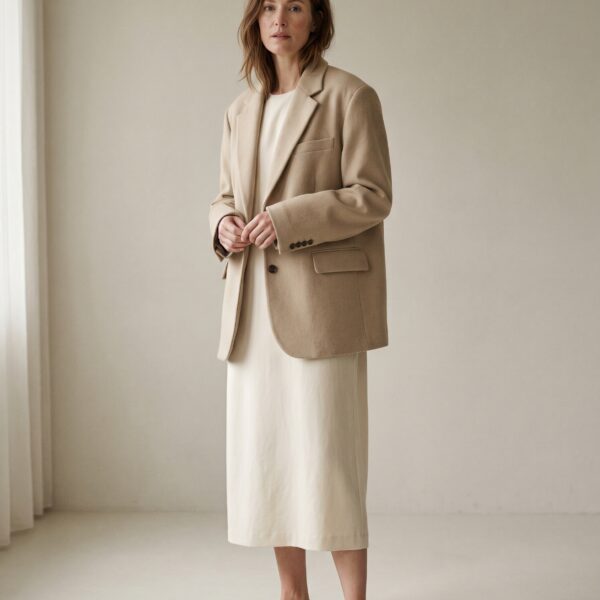
You didn’t suddenly age overnight. Your outfit is just betraying you.
Here’s the thing nobody tells you about getting dressed: the exact same person, same face, same skin, can look noticeably younger or older depending purely on what’s happening across your whole outfit.
No injections required. No new wardrobe needed. Just ten sneaky styling mistakes that are quietly adding years to your reflection every single day.
Let’s fix these outfit mistakes.
1. You’re Wearing Everything Boxy
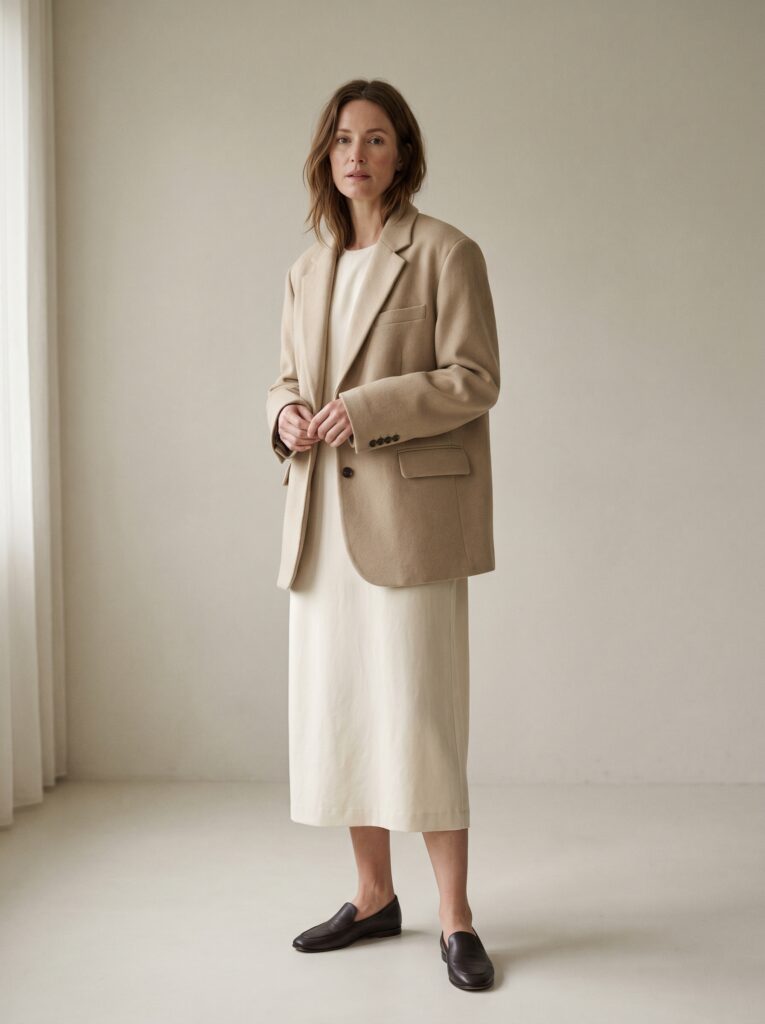
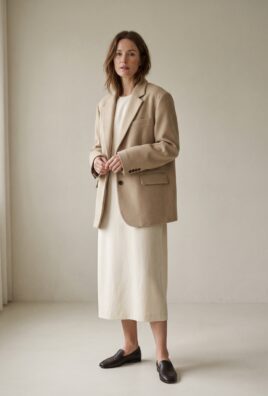
The oversized boxy blazer. The straight-cut shift dress. The shapeless tunic.
Here’s why it ages you: a boxy silhouette hides every line your body actually has — waist, hips, shoulders. Without any visible shape, your outfit reads as a rectangle, and rectangles read as “covering up.” Your brain registers that as someone trying to hide, and trying-to-hide reads as older.
The fix: Add one defined line somewhere. Tuck in a hem, cinch a waist, push up a sleeve. You don’t need to wear skin-tight anything — you just need one moment where the eye can find your actual shape.
2. Your Outfit Is All One Color (And That Color Is Beige)
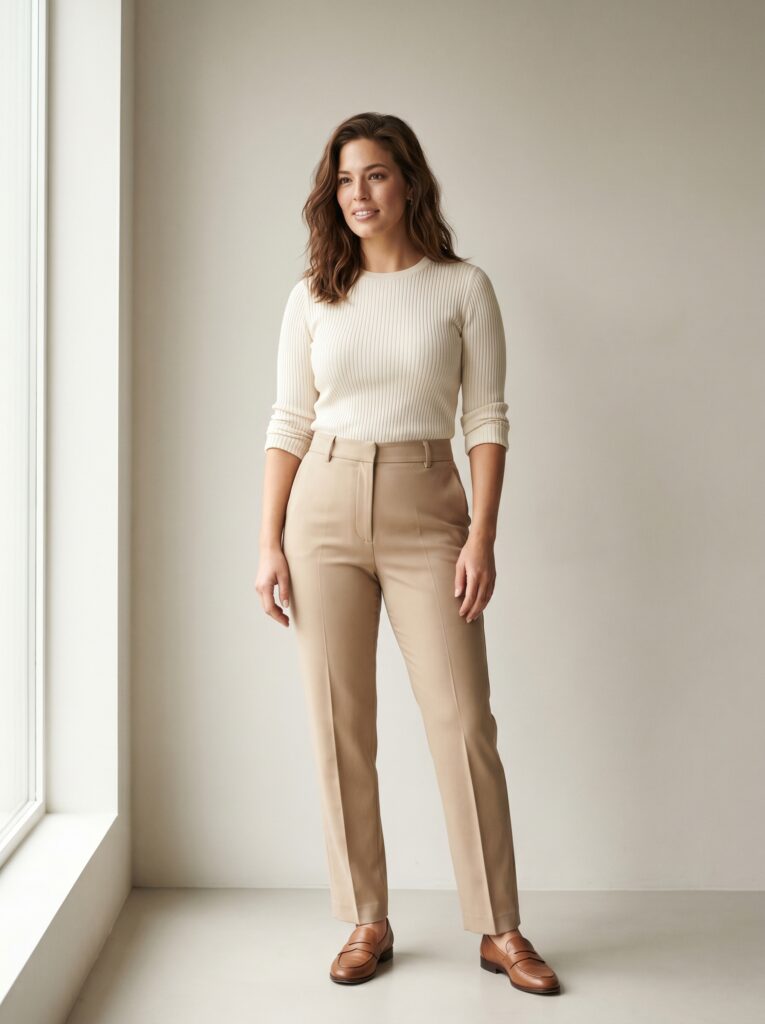
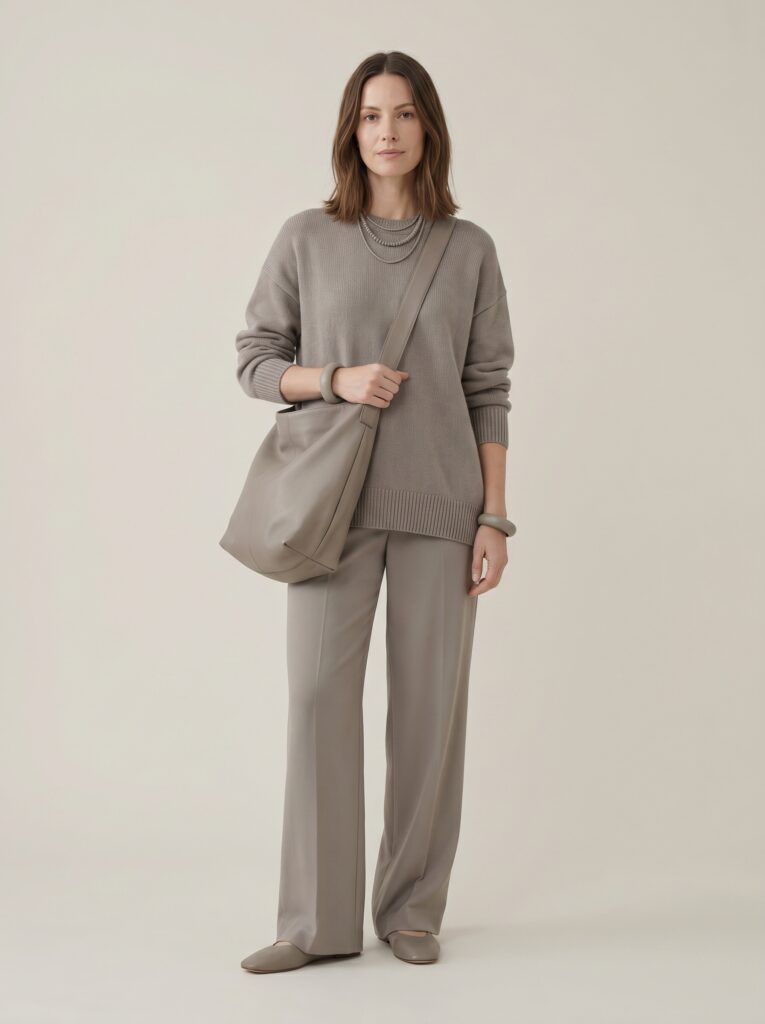
There’s nothing wrong with neutrals. There’s a lot wrong with head-to-toe greige with zero contrast.
When your top, bottom, shoes, bag, and jewelry are all in the same dusty mid-tone, the whole outfit blurs into one flat shape. Nothing pops, nothing pulls focus to your face, and the eye has nowhere interesting to land. That visual flatness reads as “tired.”
The fix: Add one piece in a deeper or brighter shade — a black bag, a crisp white tee, a real color on your lip. One contrast point wakes up the entire outfit.
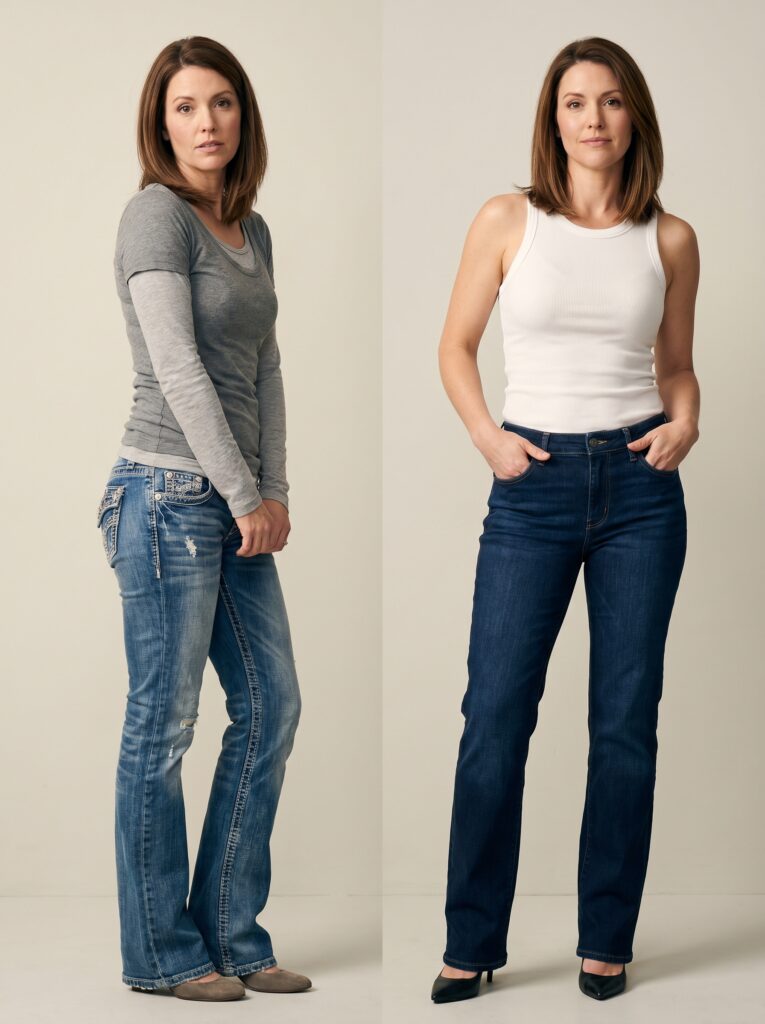
3. Your Jeans Are the Same Wash You Wore in 2012
Distressed boot-cut. Medium-blue stretchy skinnies. That whiskered “trouser jean” with the rhinestone back pocket.
Denim trends move slowly, but they do move. Wearing the exact wash and cut from a decade ago doesn’t read as classic — it reads as someone who stopped updating, and “stopped updating” is one of the fastest ways to look older than you are.
The fix: Upgrade to a clean dark wash or a true rigid light wash, in a current cut (straight, wide-leg, or barrel). Even one modern pair changes how every old top in your closet reads.
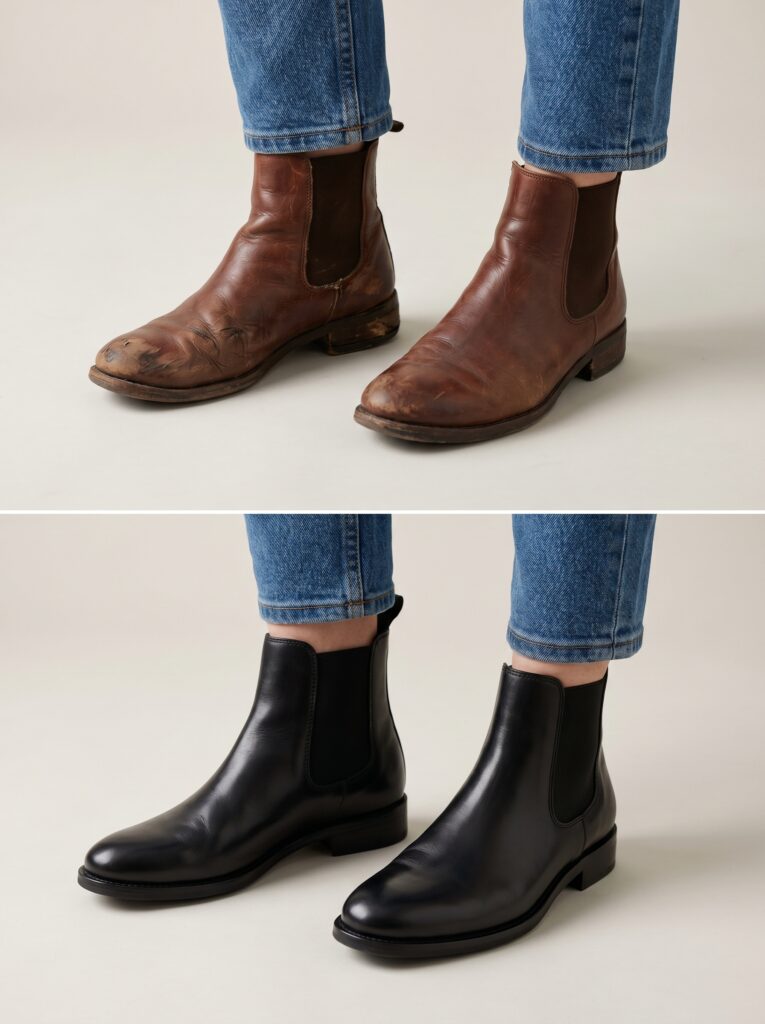
4. Your Shoes Are Tired
You probably haven’t noticed because you wear them every day, but there’s a real difference between a worn-in shoe and a worn-out one.
Scuffed toes, broken-down heels, sagging leather, flattened insoles — your shoes are aging faster than the rest of your outfit, and they’re dragging your whole look down with them. Shoes are the first thing people see when you walk in, and the last thing they see when you walk away.
The fix: Pick your three most-worn pairs and be honest. If they look exhausted, replace them. You don’t need ten new shoes — just two or three good ones that don’t look like they’ve already lived a full life.
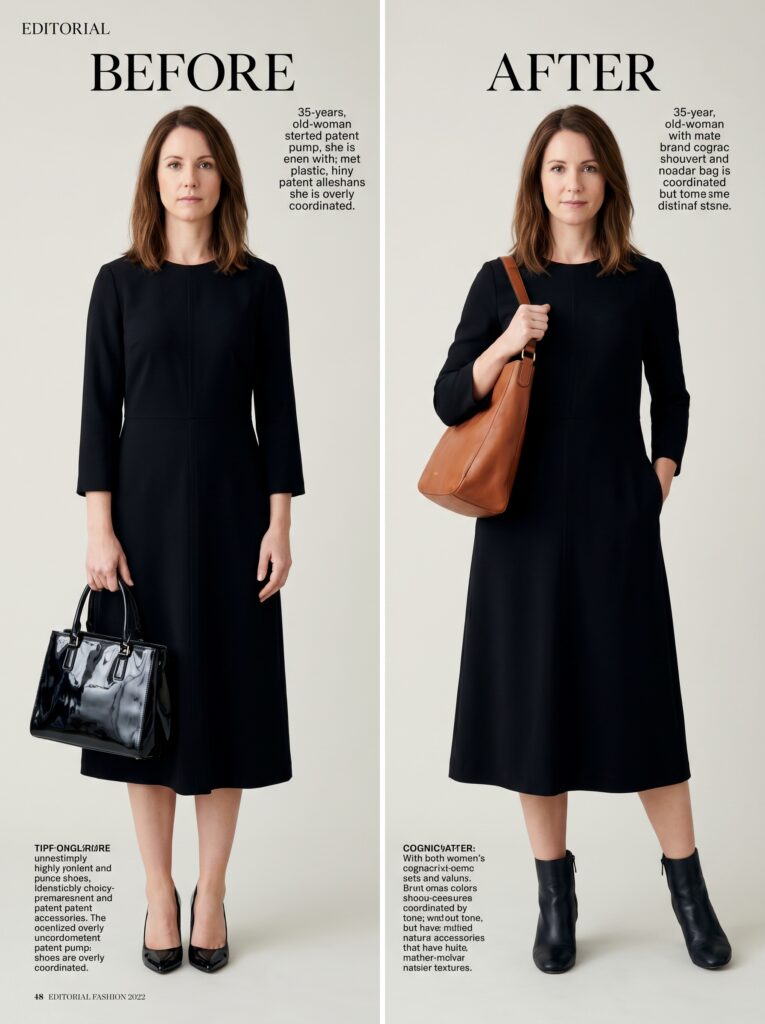
5. You’re Matching Your Bag to Your Shoes
This rule was retired around 2005, but it’s still hanging around in a lot of closets.
When your bag and shoes are the identical color and finish, the outfit instantly reads as “dressed by a department store mannequin in 1998.” It’s not about the matching itself — it’s about how aggressively coordinated it looks. Aggressive coordination = older energy.
The fix: Let them talk to each other instead of twin. A cognac bag with black boots. A white sneaker with a tan tote. Coordination through warmth or tone, not through matching exactly.
6. You’re Hiding Behind a Heavy Layer
The bulky cardigan. The oversized jacket you wear “just in case.” The shrug that’s been with you since forever.
Layers are great. Permanent layering as armor is the problem. When there’s always a sleeve or a wrap hiding your shape, the message your outfit sends is “I’d rather not be seen.” That energy ages you regardless of what’s underneath.
The fix: Try one outfit per week where you don’t add a layer. A clean top with structured pants. A dress without a cardigan thrown over it. Just the outfit, as it was designed.
7. Your Accessories Are From Three Different Eras
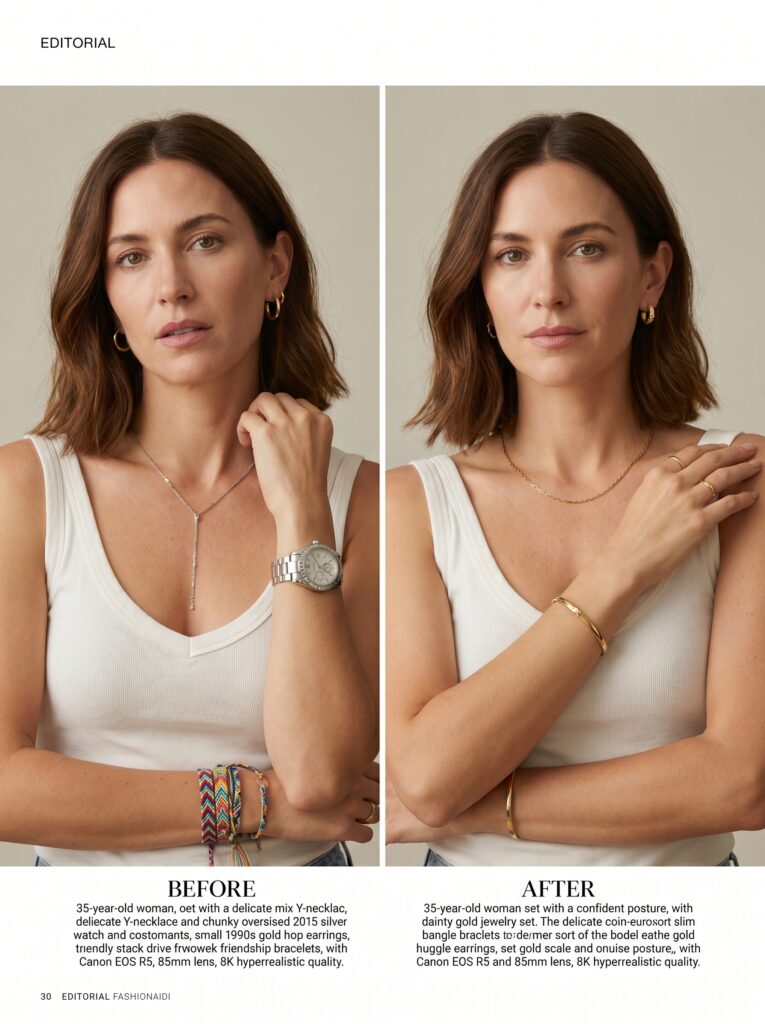
A delicate Y-necklace with a 2015 chunky watch and 1990s small hoops, plus a stack of friendship bracelets from last summer.
Each piece is fine on its own. Together they don’t tell a story — they tell five stories, all at different volumes. The eye registers that confusion as “not put together,” and not-put-together translates as older.
The fix: Pick a mood for the day and stick to it. Either all dainty, all chunky, all gold, or all silver. You can mix metals — but pick a consistent scale and stick with it across every piece you put on.
8. Your Top Has Too Much Going On at the Neckline
Ruffles, beading, a sequined trim, a busy print, AND a statement necklace — all stacked at your collarbones.
The neckline is the closest piece of fabric to your actual face. When it’s loud, busy, and crowded, your face has to compete with it for attention. And in that competition, your face loses. The visual chaos drags the eye downward and away from you.
The fix: Either the top or the necklace, never both. If your neckline already has detail, skip the jewelry. If your jewelry is the moment, keep the top clean.
9. You’re Still Pairing Everything With a Cardigan
The cardigan-over-a-dress combo. The cardigan-over-a-tank look. The cardigan over jeans and a tee for absolutely every season.
Cardigans aren’t the enemy. The reflex to reach for one with every single outfit is. A defaulted cardigan signals “I don’t know what else to layer with this,” and that hesitation is what reads as older — not the cardigan itself.
The fix: Build one alternative layering piece into your rotation. A denim jacket, a blazer, a cropped sweater vest, a button-down worn open. Anything that gives you a second instinct beyond “cardigan.”
10. You’re Dressing for the Body You Had Five Years Ago
Maybe you’ve changed shape a little. Maybe a lot. Maybe not at all but your tastes shifted. Either way, holding onto pieces that no longer feel like you is one of the most aging things you can do.
The outfit doesn’t fit anymore — physically, or just emotionally — and it shows. Tugging, adjusting, second-guessing in the mirror. All of that micro-uncomfortable energy ages you more than any single garment ever could.
The fix: Be honest about what feels like you now. Donate, sell, or store the rest. The wardrobe you’ll feel youngest in is the one that actually fits the person you are this year.
The One Thing to Remember
Every single mistake above breaks the same rule: looking younger isn’t about chasing a trend or hiding what’s there — it’s about looking like you actually mean to be wearing what you’re wearing.
Confidence reads as youth. Hesitation reads as age. Fix the hesitation in your wardrobe, and the years take care of themselves. No filter required. Just better-feeling outfits.

Leave a Comment