

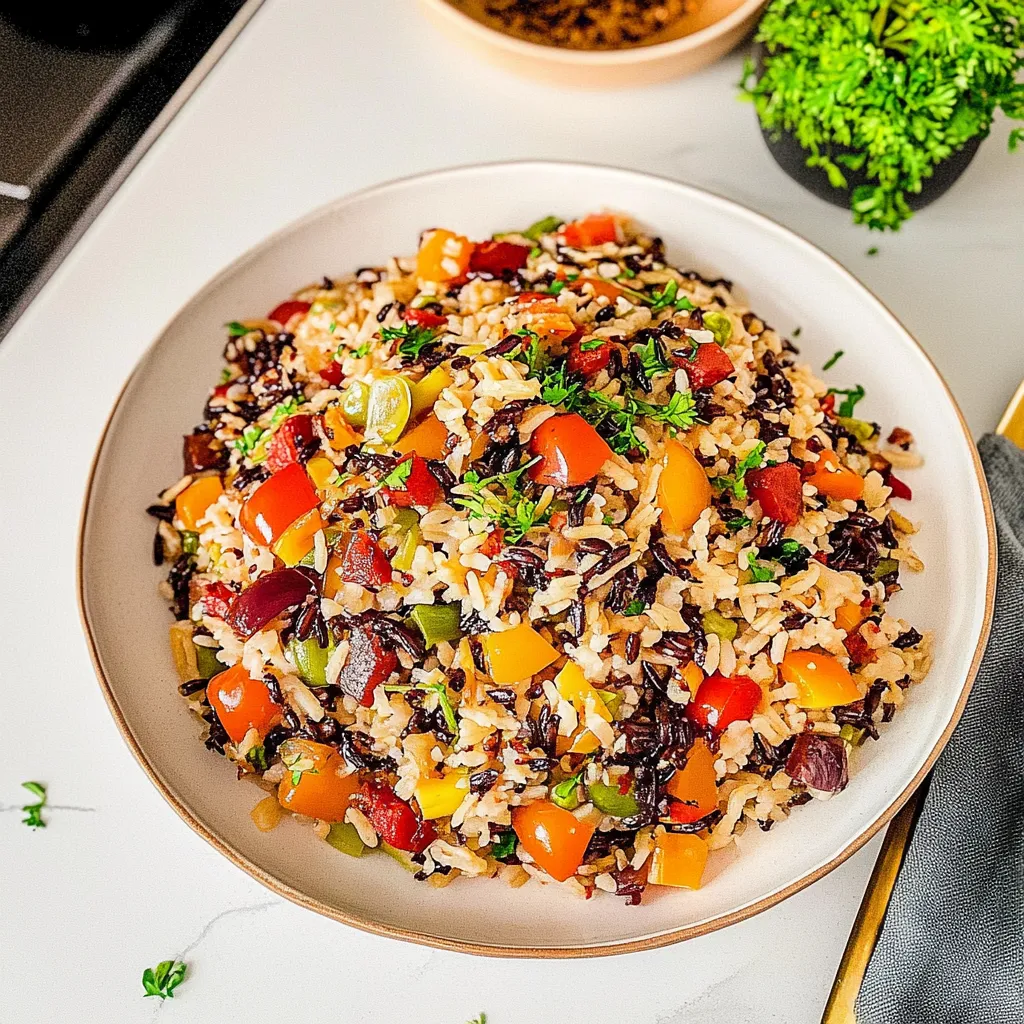
Ah, wild rice pilaf! This earthy, nutty dish reminds me of cozy family gatherings, where the aroma of hearty grains mingled with herbs filled the kitchen. I remember my grandmother’s voice calling everyone to the dinner table, her laughter mixing with the sizzle of sautéing onions and spices. Every bite was a warm hug from the inside, a comforting reminder of home and togetherness. As the seasons change and the air turns crisper, I find myself reminiscing about those cozy gatherings. Wild rice pilaf has become a staple in my kitchen—not just for its heartwarming memories but for its versatility and flavor.
Whether you’re looking to impress guests or simply want a hearty weeknight dinner, this dish holds a special place in my heart. It’s a blend of textures and flavors that always brings a comforting satisfaction to the table. Let’s dive in and create our very own pot of wild rice pilaf!
Why You’ll Love This Recipe
- Easy weeknight dinner that comes together in under an hour.
- Budget-friendly, with ingredients you probably already have at home.
- Comforting flavors that appeal to everyone, including meat-eaters and vegetarians.
- The nutty crunch of wild rice adds a unique touch to your meals.
- Perfect as a side dish or as a hearty base for other toppings.
Ingredients
Here’s what you’ll need to whip up a delightful wild rice pilaf:
- 1 cup wild rice blend (I love using a blend with brown and black rice for extra flavor)
- 2 tablespoons olive oil or butter (olive oil for a healthier touch, butter for a rich flavor)
- 1 medium onion, finely chopped
- 2 cloves fresh garlic, minced (fresh garlic adds more punch than powdered)
- 1 carrot, diced
- 1 celery stalk, diced
- 3 cups vegetable broth or chicken broth (homemade is best, but store-bought works fine)
- 1 teaspoon dried thyme (or your favorite herbs—sage or rosemary are lovely, too)
- Salt and pepper to taste
- 1/4 cup chopped fresh parsley for garnish (optional, but it adds a bright freshness)
Step-by-Step Instructions
Now that we have our ingredients, let’s roll up those sleeves and get cooking!
- Rinse the rice: Start by rinsing your wild rice under cold water. This helps wash away any debris and excess starch, keeping your pilaf light and fluffy.
- Sauté the aromatics: In a large skillet or saucepan, heat the olive oil or butter over medium heat. Toss in the chopped onion and sauté for about 3-4 minutes, until it turns tender and translucent. Add the minced garlic, diced carrot, and celery. Sauté for another 2-3 minutes until the veggies start to soften and smell heavenly.
- Add the rice: Stir in your rinsed wild rice. Toasting the rice briefly in the oil with the veggies helps to deepen the flavors. Cook for about 2 minutes, stirring occasionally.
- Pour in the broth: Carefully pour the vegetable broth (or chicken broth) into the skillet. Add the dried thyme and a pinch of salt. Bring the mixture to a boil, then reduce the heat to low. Cover the skillet with a lid.
- Let it simmer: Allow the rice to simmer on low heat for about 45 minutes, or until the wild rice is tender and has absorbed most of the liquid. Don’t be surprised if some of the rice splits open—this is just a sign of its doneness!
- Fluff and garnish: Once the rice has cooked, remove from the heat and let it sit for about 5 minutes. Remove the lid, fluff the rice with a fork, and season with salt and pepper to taste. If you’re feeling fancy, toss in some chopped parsley for a pop of color!
Pro Tips & Variations
Now that you’ve mastered the basics of wild rice pilaf, let’s play around a bit! Here are some fun twists you can try:
- Nutty Boost: Toss in some toasted pecans or almonds for a crunchy texture and added nuttiness.
- Dried Fruits: Consider adding dried cranberries or apricots for a sweet contrast—perfect for autumn gatherings.
- Different Herbs: Experiment with fresh herbs like dill, cilantro, or basil, which can change the entire flavor profile.
- Spice it up: A pinch of cumin or curry powder can bring an exciting twist to the classic flavor.
- Protein Add-ins: Stir in some cooked chicken, sausage, or chickpeas for a heartier meal.
Serving Suggestions
I often serve this wild rice pilaf as a delightful side to roasted chickens or grilled veggies—it’s a perfect companion! Picture a cozy dinner table adorned with warm baked bread, a leafy green salad, and a steaming pot of wild rice pilaf—heavenly, right? You can enjoy this dish as a warm lunch sprinkled with feta and drizzled with olive oil, or even as a cold salad the next day, perfect for meal prep.
Pair it with a glass of crisp white wine or hot herbal tea, and you’re all set for a cozy evening! Don’t forget to sprinkle some extra herbs or cheese on top for a gourmet touch.
Storage Tips
Got leftovers? Lucky you! Wild rice pilaf stores beautifully. Here’s how to keep it fresh:
- Refrigerating: Allow the rice to cool completely, then transfer it to an airtight container. It will keep in the fridge for about 3-4 days.
- Freezing: Wild rice pilaf freezes well, too! Portion it into freezer-safe bags, pressing out as much air as possible. It should last for up to 3 months. Just label them so you know when it was made!
- Reheating: To reheat, simply thaw overnight in the fridge if frozen, then warm it in a skillet over low heat, adding a splash of water or broth to revive its luscious texture. You can also microwave it in a bowl covered with a damp paper towel. Just don’t forget to stir it halfway!
FAQs
Can I use regular rice instead of wild rice?
While you can use regular rice, the cooking time and liquid ratio will differ. Wild rice has a unique texture and flavor that regular rice just can’t replicate. If you’re in a pinch, go for brown rice—it has a nutty flavor that’s somewhat similar, but keep an eye on cooking times!
Why is my wild rice still hard after cooking?
If your wild rice is still hard, it might need more liquid and time. Sometimes, older wild rice can take longer to soften. Just add another half cup of broth, cover, and let it simmer for a bit longer until tender.
Can I make this pilaf ahead of time?
Absolutely! This dish not only tastes fantastic fresh but also tastes even better the next day. Just prepare it ahead, let it cool, and store it in the fridge until you’re ready to serve. It’s perfect for meal prep!
Is wild rice gluten-free?
Yes, wild rice is naturally gluten-free, making this dish a great option for anyone on a gluten-free diet. Make sure your broth is also gluten-free if that’s a concern!
What can I serve with wild rice pilaf?
This pilaf pairs beautifully with roasted meats, stir-fried veggies, or even a hearty soup! It’s such a versatile dish that can accompany just about anything. You could even top it with a poached egg for a delightful weekend brunch.
As we wrap up this culinary adventure, I hope you find as much joy in making wild rice pilaf as I do. It’s a dish rooted in love, flavor, and warmth. I’d love to hear how yours turns out or if you made any fun variations. Don’t be shy—drop a comment below and let’s keep the conversation going. Happy cooking, my friend!



Leave a Comment